
Know your normal
Track SPLH by daypart for several weeks before setting aggressive targets.
Learn how to calculate sales per labour hour, why it matters for restaurant rota planning and how hospitality managers use it to improve labour productivity without damaging service.
Sales per labour hour is a restaurant productivity KPI that shows how much sales revenue is generated for every paid labour hour worked. It helps managers understand whether staffing levels are aligned with demand, rather than only looking at total wage cost or labour percentage.
This matters because labour cost percentage can hide what is happening inside the week. A restaurant may have an acceptable weekly labour percentage but still be overstaffed on quiet lunches and under-supported during peak dinner service. Sales per labour hour helps reveal those patterns more clearly.
Sales per labour hour measures how much revenue the restaurant generates for each hour of staff time scheduled or worked.
The formula is simple: divide total sales by total labour hours for the same period. The period can be a shift, a day, a week or a month, but both numbers must cover the same time period.
Sales Per Labour Hour = Total Sales ÷ Total Labour Hours
For example, if a restaurant generates £5,000 in sales during a shift and the team works 80 total labour hours, sales per labour hour is £62.50.
This means the restaurant generated £62.50 in revenue for every hour of labour used during that shift.
| Period | Total sales | Labour hours | Sales per labour hour |
|---|---|---|---|
| Monday lunch | £1,200 | 40 hours | £30.00 |
| Friday dinner | £5,000 | 75 hours | £66.67 |
| Saturday dinner | £6,800 | 85 hours | £80.00 |
In this example, Saturday dinner is the most productive period because each labour hour generates more sales. Monday lunch is the weakest period and may need a rota review, stronger sales activity or a different staffing structure.
Restaurants track sales per labour hour because it connects staffing decisions with actual revenue productivity. Labour cost percentage tells managers how much revenue is spent on labour. Sales per labour hour shows how effectively those hours are being used.
For broader labour cost strategy, read the Restaurant Labour Cost Guide.
Labour cost percentage and sales per labour hour are related, but they answer different questions. Labour cost percentage tells you how much labour costs compared with sales. Sales per labour hour tells you how productive the scheduled hours are.
| Metric | Question it answers | Best use |
|---|---|---|
| Labour Cost % | How much of sales is spent on staffing? | Profitability and cost control |
| Sales Per Labour Hour | How much revenue does each labour hour generate? | Productivity and rota planning |
A manager should use both. Labour percentage protects margin, while sales per labour hour helps explain where rota productivity is strong or weak.
There is no universal good sales per labour hour because every restaurant model is different. A quick service restaurant, coffee shop, casual dining venue and fine dining restaurant all have different average spend, service expectations and staffing needs.
The best approach is to build your own baseline. Start by calculating sales per labour hour by daypart for several weeks, then compare similar periods against each other. Monday lunch should be compared with other Monday lunches, not with Saturday dinner.
Track SPLH by daypart for several weeks before setting aggressive targets.
Compare similar shifts, trading periods and service styles instead of mixing everything together.
Use the data to reduce dead hours and protect staffing during genuine peak demand.
Sales per labour hour is most useful before the rota is published. If you know your sales forecast and target SPLH, you can estimate how many labour hours the business can afford.
Target Labour Hours = Forecast Sales ÷ Target Sales Per Labour Hour
For example, if Friday dinner is forecast to generate £4,800 and your target is £80 sales per labour hour, the rota target is 60 labour hours. Managers can then decide how to distribute those hours across kitchen, floor, bar, hosting and management.
The Staff Schedule & Labour Cost Calculator calculates sales per labour hour automatically from weekly sales and scheduled hours.
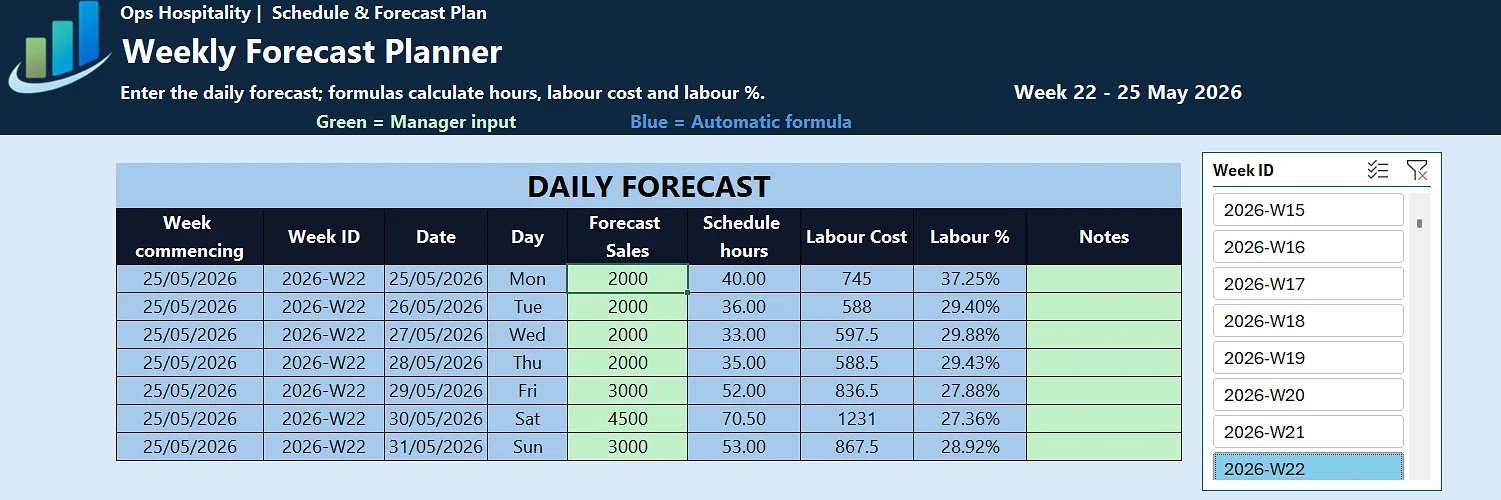
Sales per labour hour is most powerful when it shapes next week’s rota. Use the Schedule & Forecast Planner to connect forecast sales, planned hours, labour cost and weekly schedule decisions in Excel.
View Schedule PlannerLooking only at weekly SPLH can hide the real story. The strongest use of this KPI is by daypart: breakfast, lunch, afternoon, dinner, late night or event service. This shows where staffing hours are working and where they are being wasted.
This prevents managers from cutting labour in the wrong place. A low weekly result may be caused by quiet afternoons, not by the busy dinner shift that actually needs support.
A higher sales per labour hour is not always better if it comes from understaffing. If the team is too stretched, guests may wait longer, spend less and return less often. The target should improve productivity without damaging service.
Managers should review SPLH alongside service indicators such as wait times, complaints, table turn time, staff feedback and average spend. A productive rota should protect both margin and guest experience.
For practical staffing actions, read How to Reduce Restaurant Staffing Costs Without Hurting Service.
The goal is not to chase a number blindly. The goal is to make the rota more accurate, more productive and better matched to real demand.
Use the free Labour Cost Calculator to calculate SPLH quickly, or use the Schedule & Forecast Planner when you want a full weekly Excel workflow for forecast sales, planned hours, labour cost and rota decisions.
Divide total sales by total labour hours for the same period. For example, £5,000 sales divided by 80 labour hours equals £62.50 sales per labour hour.
It shows how much revenue the restaurant generates for every paid labour hour worked or scheduled.
No. They measure different things. Labour cost percentage measures cost control, while sales per labour hour measures labour productivity.
Restaurants can improve sales per labour hour by forecasting sales, reducing dead labour, improving rota accuracy, cross-training staff and increasing average spend per guest.